When people speak of Kumbh Mela, their minds travel north to Prayagraj, Haridwar, Nashik, and Ujjain.
But South India has always had its own Kumbh older, quieter, and deeply interwoven with Kerala’s civilisational memory.
In 2026, Kerala witnesses the renewal of the Mahamagh Mahotsavam, now widely recognised as the Kumbh Mela of Kerala a revival rooted in the ancient legacy of Mamankam, once South India’s greatest pilgrimage and cultural epicentre.
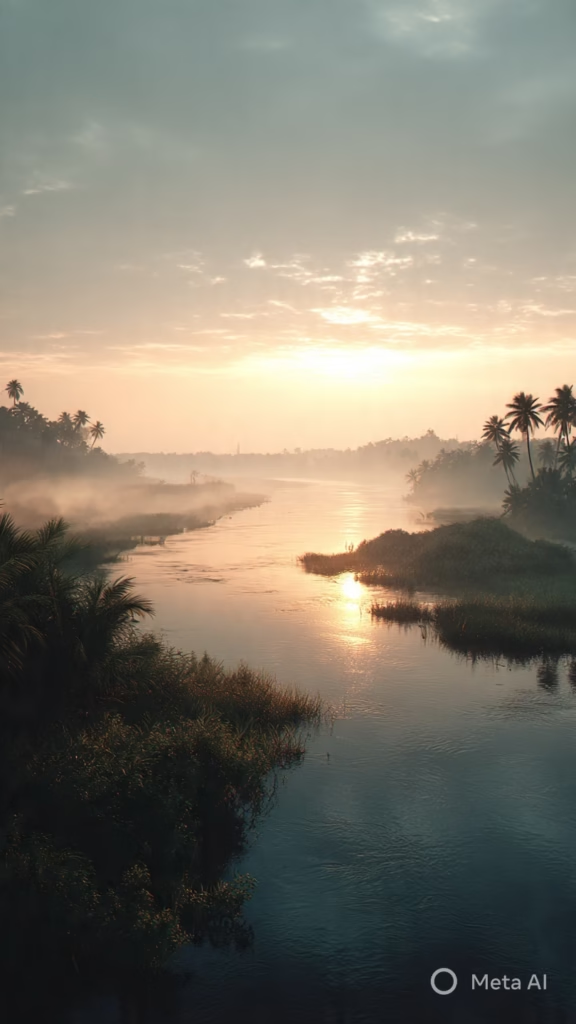
Kerala Kumbh Mela 2026: Dates and Duration
When: January 18 to February 3, 2026 Duration: 17 days
The festival unfolds during the most auspicious phase of the Magha month, marked by multiple sacred bathing days and major Hindu observances. Like the northern Kumbh, the ritual bath forms the spiritual core of the event.
Where Kerala’s Kumbh Mela Takes Place
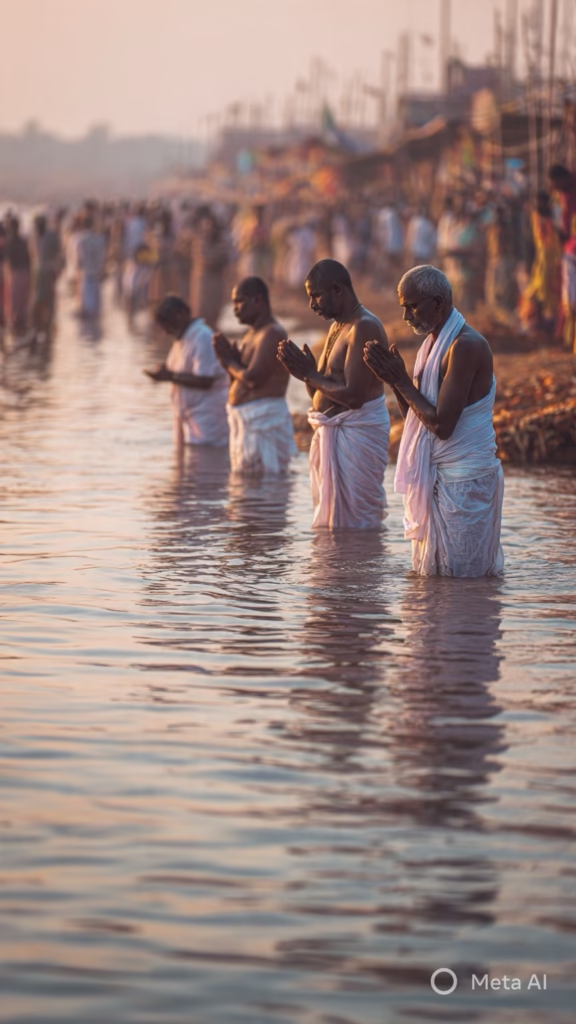
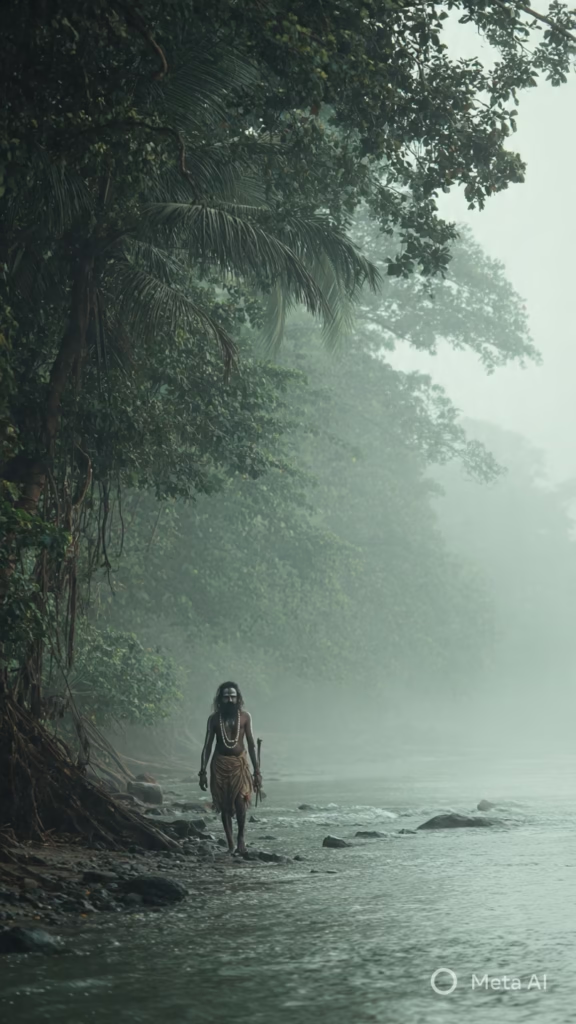
The Mahamagh Mahotsavam will be held on the banks of the Bharathapuzha River, near the Thirunavaya Nava Mukunda Temple, in Malappuram district.
Bharathapuzha revered as Dakshina Ganga is among Kerala’s holiest rivers.
Traditional belief holds that bathing in Bharathapuzha during the Magha month is spiritually equivalent to bathing in the northern sacred rivers during Kumbh Mela.
Who Is Organising the Kerala Kumbh Mela
The revival is being led by the Juna Akhara, one of the most prominent Hindu monastic orders in the country.
The initiative gained decisive momentum after Swami Anandavan Bharati Maharaj appointed Mahamandaleshwar for South India during the last Prayagraj Kumbh Mela resolved to restore the ancient Mahamagh Mahotsavam of Thirunavaya on a grand, authentic scale.
This marks a rare moment where North Indian akhara traditions formally acknowledge and revive a Southern Kumbh lineage.
Mythological Origin: Parashurama and the First Yajna
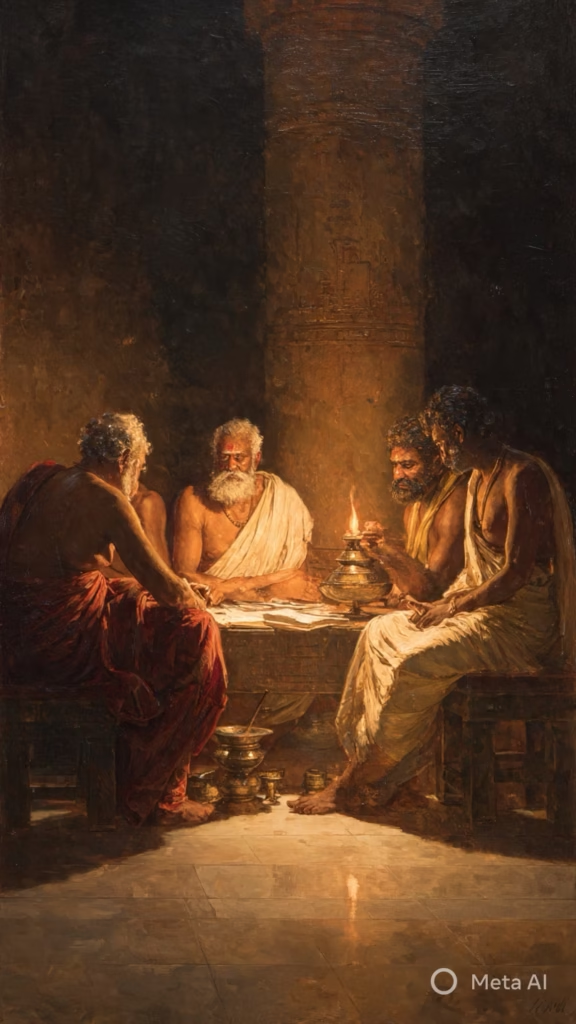
According to sacred tradition, Parashurama, the mythical creator of Kerala, performed the first yajna for universal welfare on the banks of Bharathapuzha at a place then known as Tapasunur (present-day Thavunur).
The yajna was conducted under the guidance of Brahma, with all devas in attendance.
It was during this divine assembly that:
The Magha month was declared supremely auspicious Seven sacred rivers were believed to spiritually converge into Bharathapuzha The twelve-year Mahamagh cycle was established
This cosmological belief became the spiritual foundation of Kerala’s Kumbh tradition.
Mamankam: Kerala’s Lost Civilisational Parliament
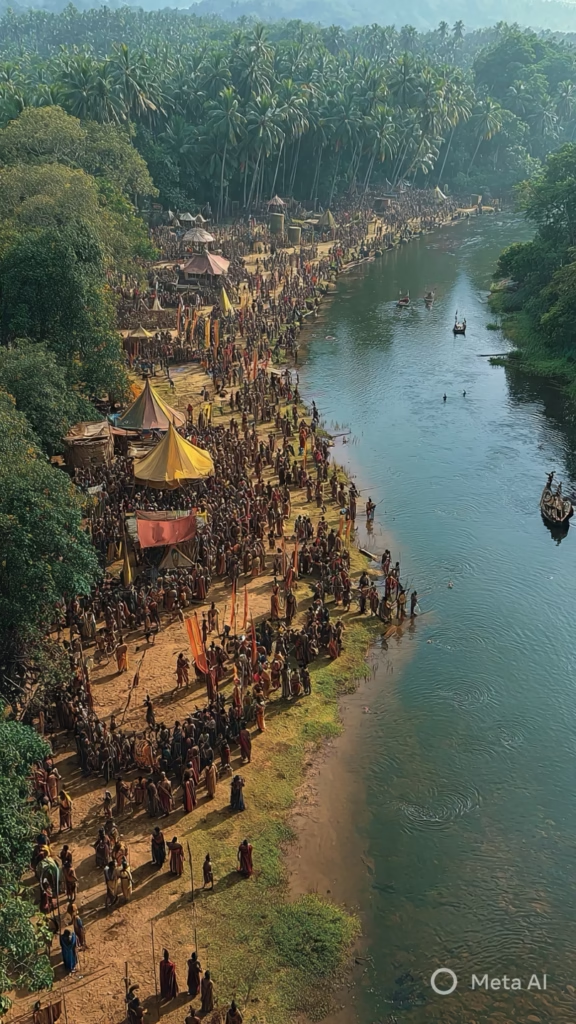
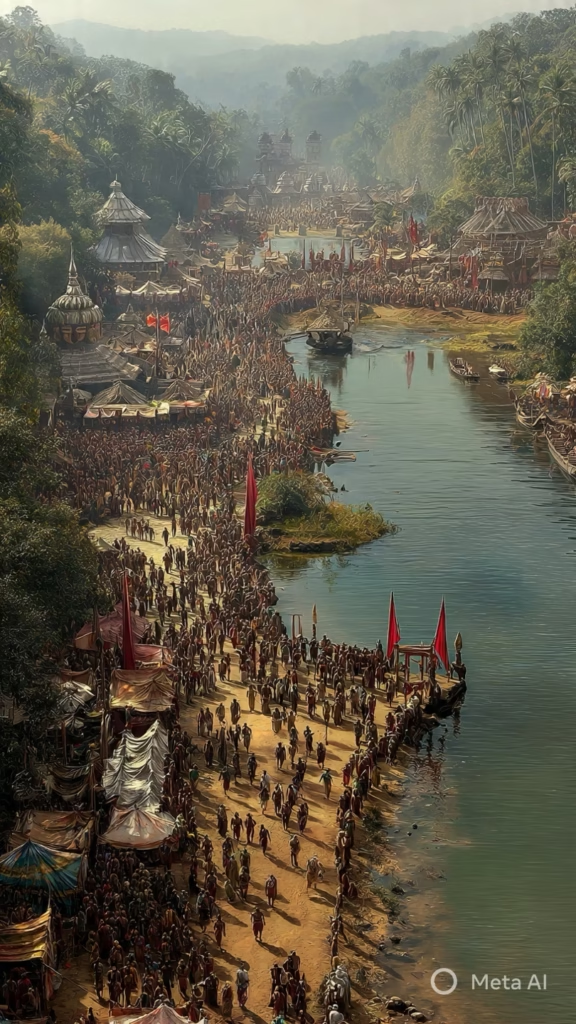
As the age of gods gave way to human governance, Mahamagh evolved into Mamankam a monumental event that shaped Kerala’s political, cultural, and intellectual life.
Tradition holds that Brihaspati served as the first chairman of Mamankam. Later, this role was assumed by the Perumals of Kerala.
Every twelve years, Mamankam became a convergence where:
Kings presented accounts of their reigns Scholars debated philosophy, science, and metaphysics Martial traditions and cultural forms were showcased Astrologers predicted climate cycles and agriculture A new Perumal was chosen for the next cycle
Mamankam was not merely a festival it was South India’s greatest cultural, academic, military, and economic fair.
The Fall of Mamankam and Centuries of Silence
After the departure of Cheraman Perumal, royal patronage weakened.
What followed was a tragic transformation:
Power struggles between Valluvanadu rulers and the Zamorin of Calicut Ritual combat and political assassinations Mamankam turning into a blood-stained arena
By around 250 years ago, the violent Mamankams came to an end.
The festival faded from public life, leaving behind legends, ballads, and silence.
Kerala Kumbh Mela: Not an Imitation, but a Restoration
The Kerala Kumbh Mela is not a copy of the northern Kumbh.
It is the revival of an indigenous South Indian tradition, older than many later ritual forms.
What is being restored is:
The Mahamagh cycle The sanctity of Magha snana in Bharathapuzha The memory of Mamankam as a civilisational gathering
This is not nostalgia.
It is continuity reclaimed.
A Silent Truth
North India preserved Kumbh through myth.
Kerala preserved it through memory.
In 2026, memory returns to water.